




Field signs
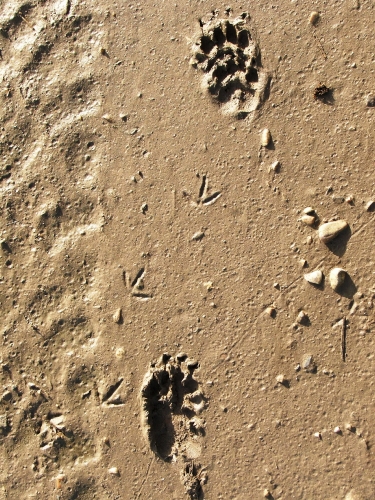
Badger field signs include their characteristic latrines, where multiple dung-pits occur in one place. Paths are often very conspicuous as are setts, which have a large characteristically D-shaped entrance.
Hairs are often found attached to brambles and barbed wire.
Habits
Badgers often live communally in large underground setts in groups of four to six animals on average, although they can be solitary at certain times of the year. On average badgers live for four to eight years in the wild. Their setts are found throughout all types of habitat including some towns but are particularly common in wooded areas.
Reproduction and life cycle
Badgers have a reproductive technique known as embryonic diapause. Sows having their first oestrus cycle and those with cubs, mate and then keep the fertilized blastocysts in a state of suspended development until they implant in the uterine wall and start developing, usually in December. Despite the presence of the blastocysts, mating and additional oestrus cycles can still occur. One to five cubs are born in January to February after about seven weeks’ gestation, although occasional litters can occur at other times. Cubs are born blind but are otherwise similar, occasionally paler versions of their parents. Boars are fairly territorial and occasionally polygamous but this is rare.
Distribution, status and conservation
Due to the on-going persecution of badgers, a distribution map has purposely been omitted from this account. Badgers are common in much of Kent and found throughout the whole of the county wherever there is suitable habitat for establishing their setts. The generally secretive and nocturnal nature of this species ensures that most reported sightings are of dead animals as a result of road kill. They used to occur on the Isle of Sheppey but were probably made extinct there in the mid-Victorian period. Badgers and their setts are fully protected by the 1992 Protection of Badgers Act.
