
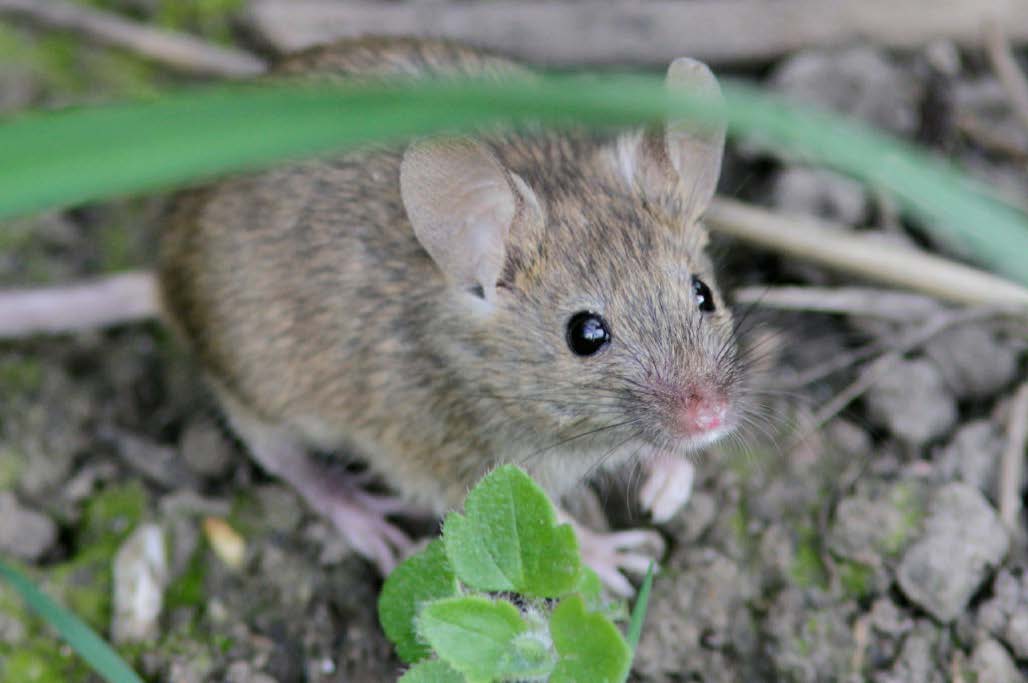

Field signs
When found within buildings a strong musty mouse smell is easily identified. The house mouse communicates by depositing urine along regularly used runs, which leaves a sticky consistency.
Habits
This mouse generally populates areas close to human settlements, and can exist in extremely high numbers when an abundance of food is available.
Nests are made from dried vegetation, but it has been known to use a range of man-made materials such as cloth, plastic and twine. The diet is mainly seeds and cereal grains and it will eat livestock foods by chewing through storage bags.
In urban areas house mice can be found within houses (where they have been known to nest in the cavity walls), sheds and outbuildings. On farmland they are often found within grain stores or amongst livestock. This species has also been known to inhabit hedgerows located close to human settlements.
At the Wildwood Trust, house mice regularly inhabit compost heaps and animal enclosures as these provide warmth throughout the winter and an abundance of food.
Reproduction and life cycle
When living within buildings, the house mouse can produce a litter per month throughout the year if an abundance of food is available. When living outdoors litters are only produced throughout the summer months. Gestation is approximately 20 days, with litters of up to eight young which are weaned after 21 days. It has been known for adult females to share a nest with another female whilst rearing young.
At the Wildwood Trust, when checking through the pockets of a coat left hanging in a shed, a litter of young house mice was found in a nest made from the soft lining.
Distribution, status and conservation
In Kent, house mouse distribution is widespread and generally linked with areas of higher human density; however, it is likely to be under-recorded. It may be caught by domestic cats as a result of its proximity to humans, but is more frequently predated by small mustelids, rats and owls.
Populations of the house mouse may be affected by the use of rodenticides, but can quickly recover due to the number of young produced. The mean lifetime production of young by a fertile female is about 40.
