

Field signs
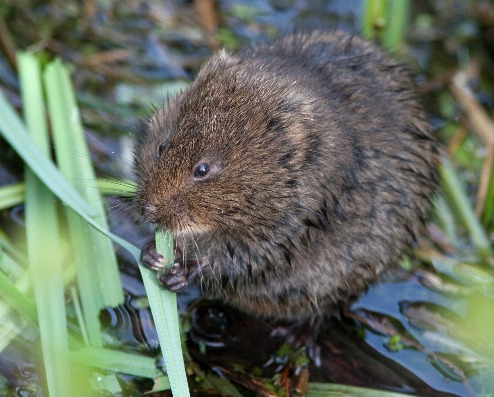
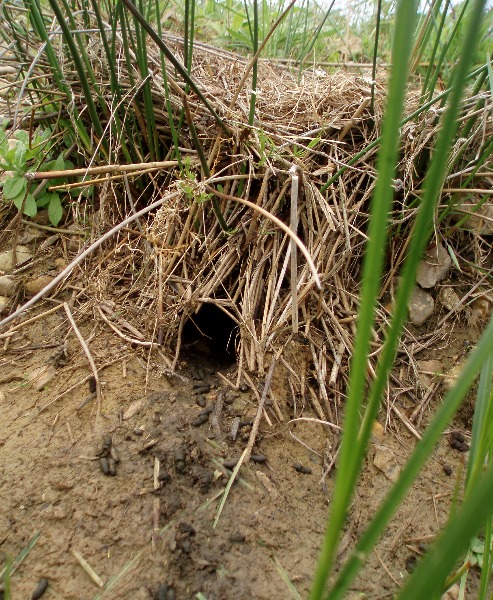
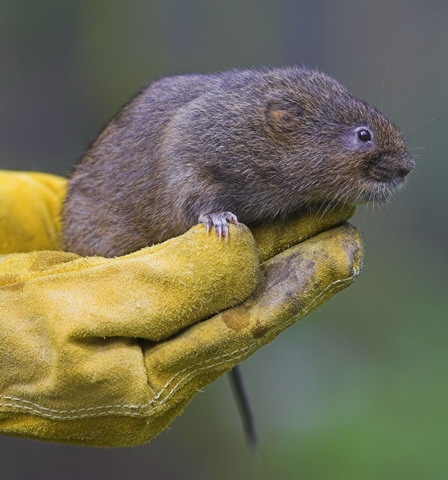
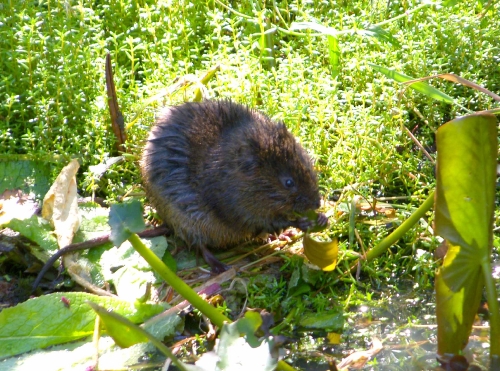
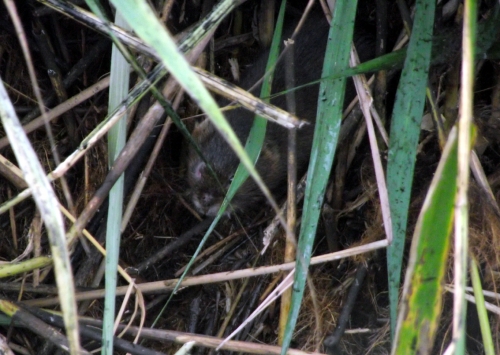
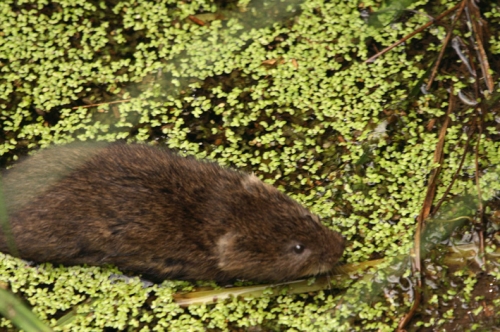
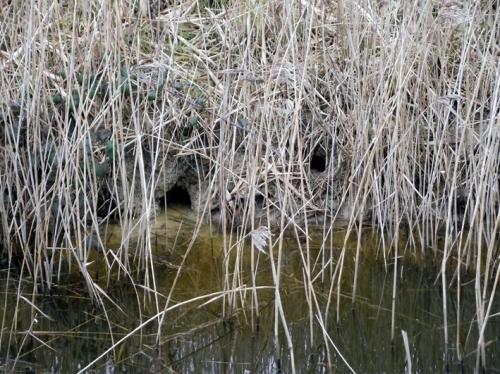
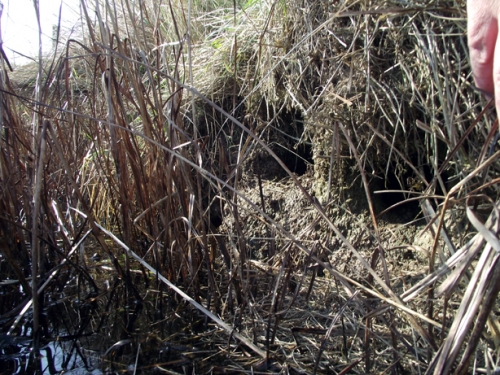
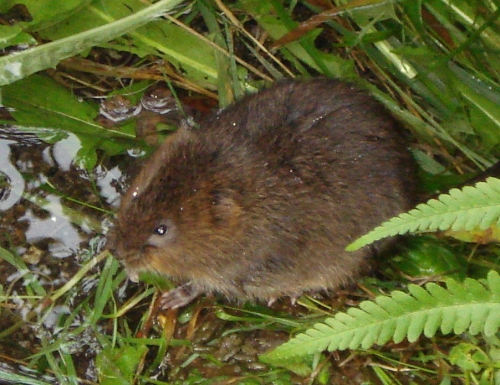
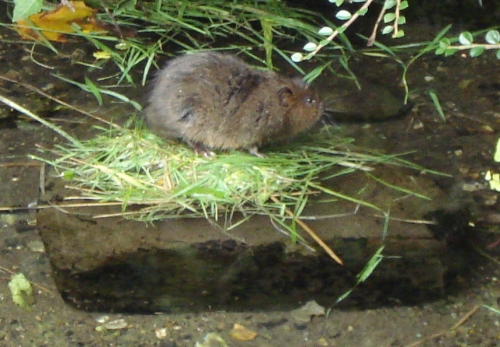
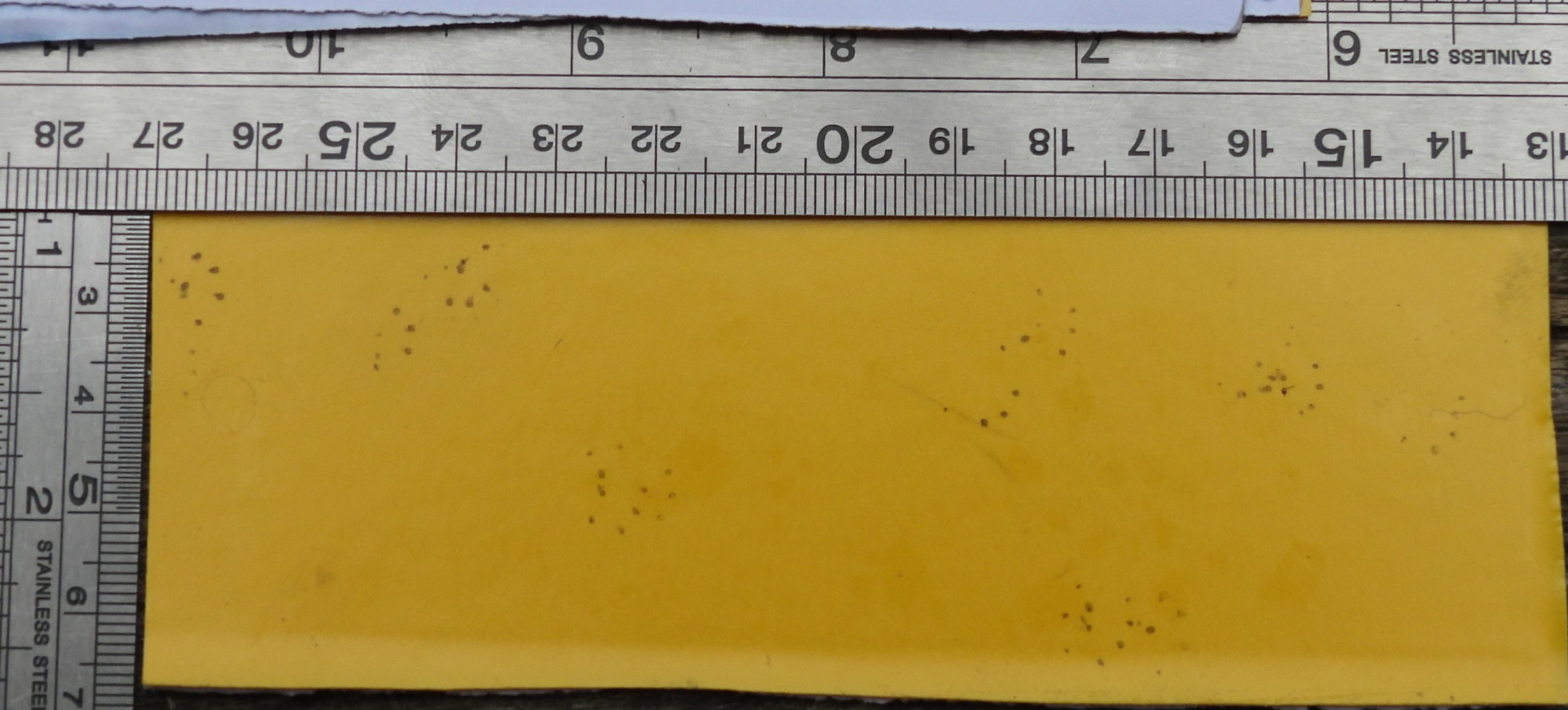
Due to its shy nature, seeing a water vole in the wild is very difficult. Occasionally whilst walking along a riverbank you may hear a characteristic ‘plop’ as it dives into the water, its way of alerting neighbouring voles to a potential threat. However, the most notable field sign is its latrine. Deposited faeces are flattened by drumming its hind feet thus adding scent from its lateral scent glands. This communicates its territorial status and breeding condition to neighbouring voles. Generally latrines are located in prominent places throughout its territory. At sites within Kent latrines have been found upon floating timber, polystyrene tiles and a disused tyre. Other indicators to determine presence are burrow entrances and feeding stations, which are small piles of cut vegetation, approximately 100 mm long and chewed at a 45° angle.
Habits
Water voles inhabit locations near to water with lush riparian vegetation used as cover and food. They prefer slow-moving, shallow fresh water with penetrable river banks. A network of underground burrows is created by chewing into the banks and removing the spoil with their feet. Nests above ground occur in reed bed habitat such as Stodmarsh in Kent.
The voles’ teeth are open-rooted, so grow continually and are worn down whilst excavating burrows and feeding. Primarily herbivores, they are known to eat ~277 different species of plant.
Reproduction and life cycle
The main breeding season is from March to October, dependent on weather conditions. During mild winters breeding can be as early as February.
Gestation lasts 20 to 30 days and once the female has given birth she is sexually receptive within 24 hours. The first litter is weaned by the time she gives birth to her second. The female creates an intricate nest woven from shredded vegetation in which she rears her young. One pair may typically produce three to five litters of three to six juveniles. They are born blind and furless and after approximately 10 days their eyes open. At two to three weeks the young begin to venture away from the nest, becoming fully weaned shortly after.
Distribution, status and conservation
In the UK, water voles have suffered a 90-95% decline since the 1960’s, mainly due to habitat loss and predation by the non-native American mink. Its distribution in Kent is linked with the more complex water systems and the extensive reed beds in the North Kent Marshes, Stodmarsh and Romney Marsh. It may also occur in reed-fringed saline lagoons and is found in brackish tidal ditches at Swalecliffe. Intricate ditch and dyke networks and reed beds provide an abundance of vegetation which may reduce the risk of American mink predation. These habitat types offer a stronghold for the species in Kent and provide opportunities for further targeted conservation efforts and re-introductions to expand its range. However, any future conservation efforts need to include long term monitoring and control of American mink to allow water vole populations to successfully establish.
The water vole has full protection under the Wildlife and Countryside Act 1981 and is a Species of Principle Importance (SPI) under the Natural Environment and Rural Communities (NERC) Act 2006. Therefore it is an offence to intentionally kill, injure, take or disturb water voles.
