

Field signs
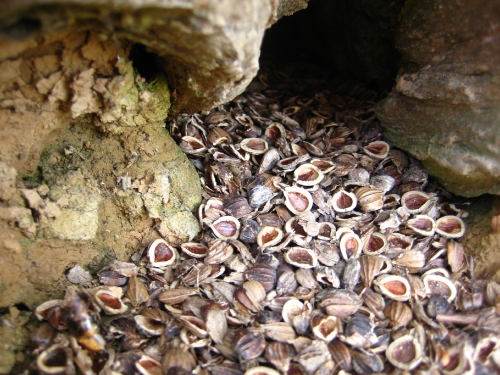
Wood mice nibble a round hole in hazelnut shells, leaving a corrugated effect of tooth marks across the cut surface around the edge of the opening and scratch marks on the outer surface of the shell.
Nests consist of a loose pile or cup of brown leaves and are often found in hazel dormouse nest boxes.
The skulls can be found in tawny and barn owl pellets but they are difficult to distinguish from those of the yellow-necked mouse.
Habits
The primary habitat of the wood mouse is woodland but it is found in a range of others including gardens, hedgerows, arable fields, road verges, heathland and saltmarsh. Diet varies with habitat and season and includes seeds and fruits, buds, invertebrates and fungi.
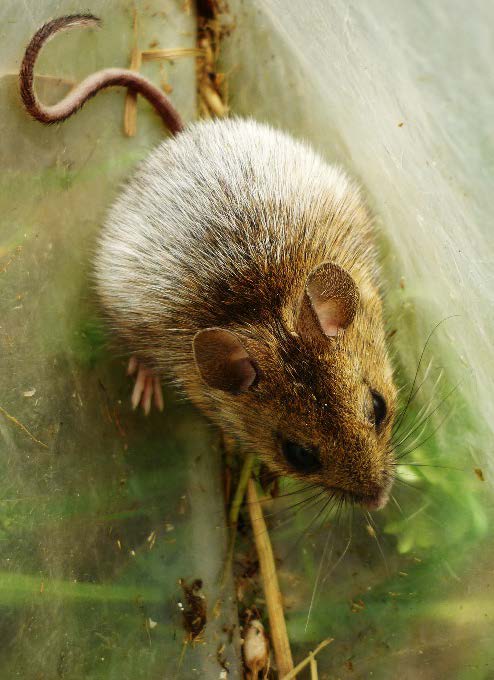
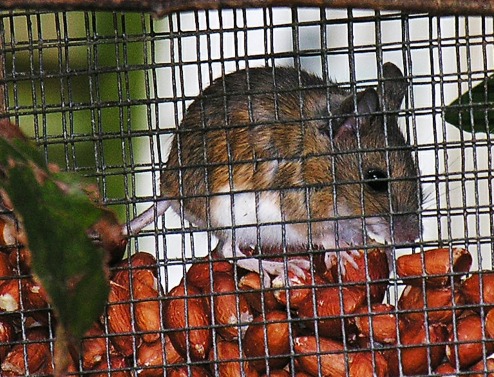
Wood mice have powerful jaws and given time can chew their way out of aluminium traps and plastic tanks.
In Kent, a female wood mouse made a nest in a desk drawer from a winter scarf. The wood mouse later raised a litter of young in a cardboard box under the desk, nesting in a pair of waterproof overtrousers.
Reproduction and life cycle
The main breeding season is from March to October but pregnant females have been trapped in Kent in December. Females can have up to six successive pregnancies in a season, with average litters of four to seven young. Born naked and blind, the pups are weaned at 18 to 22 days. Young females can become pregnant at only 12 g. Few adults survive from one breeding season to the next.
Distribution, status and conservation
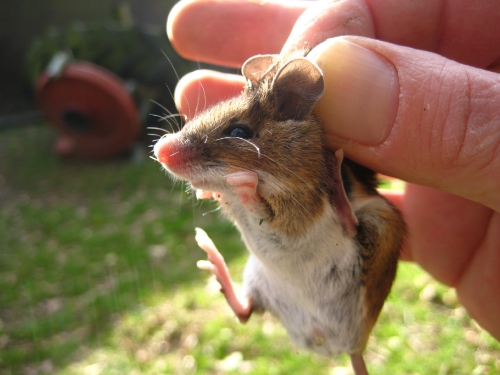
The wood mouse is the most common species encountered during small mammal trapping surveys in Kent and can be trapped in almost any habitat including saltmarsh. It frequently enters houses, particularly in winter, and is commonly caught by domestic cats. It is an important food source for other predators including mustelids, foxes and kestrels.
The wood mouse is beneficial to man as it preys on insect pests but can be a nuisance in gardens, farms and food stores by eating seed or seedlings.
